
How Does Cashback Work? A Simple Guide to Earning Money Back When You Shop Online
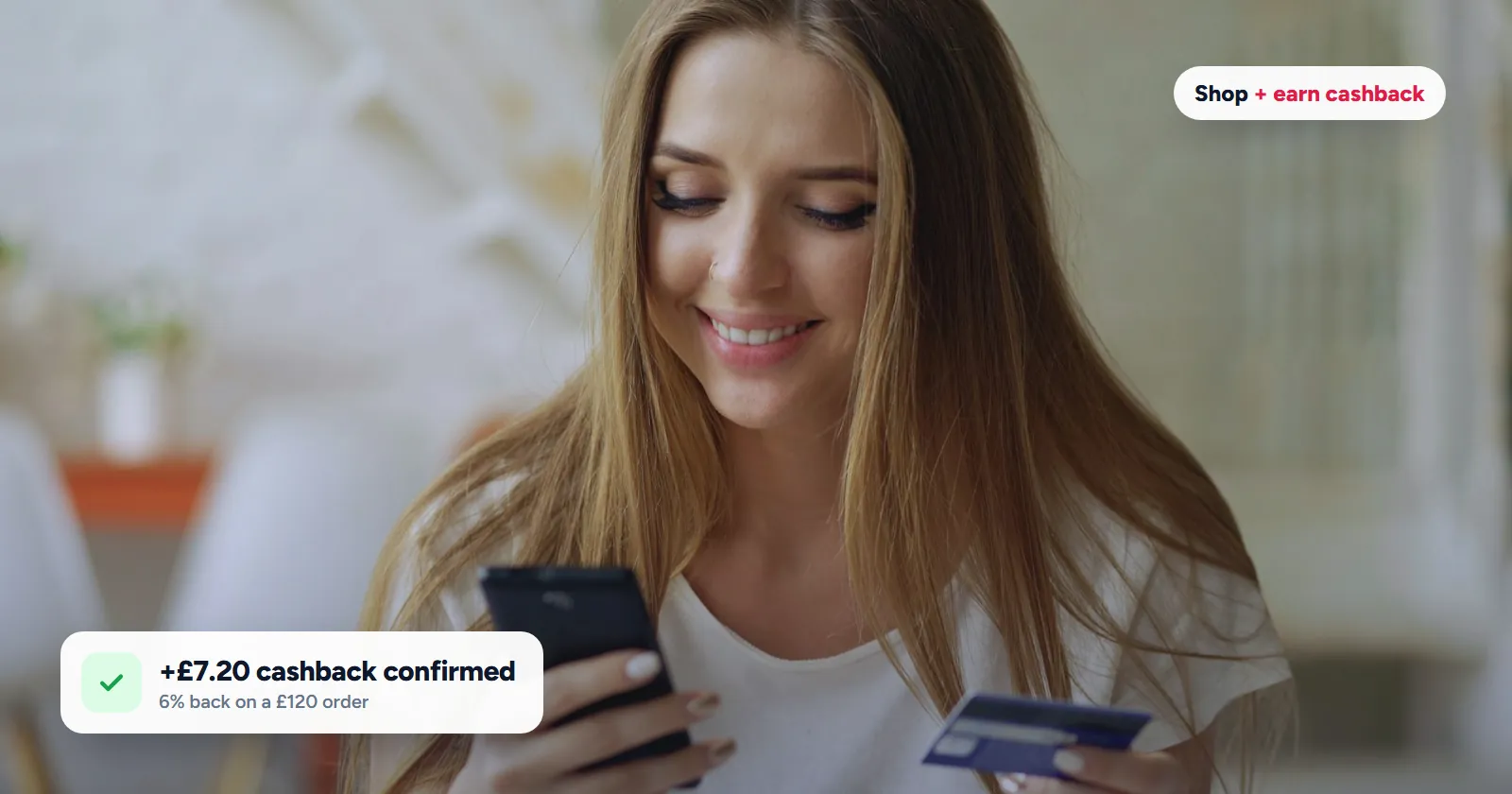
The first time someone tells you a website will pay you for shopping, it sounds like a catch is coming. You buy the same thing, at the same price, from the same shop, and a few weeks later some of that money comes back to you. No points, no store credit, no subscription.
There is no catch, but there is a reason it works, and once you understand it you can use cashback properly instead of just hoping it turns up. This guide explains what cashback is, where the money comes from, how much retailers actually pay, why it sits as “pending” for weeks, whether it is taxable, and the habits that make sure every purchase tracks.
Cashback at a glance
- What it is: a percentage of your order paid back to you after you buy. The retailer funds it, not you.
- Typical rate: across 7,771 retailers we track, the middle rate is 3.5%. One in four pays 5.25% or more.
- When you get it: it usually shows as pending within a few days and is confirmed once the retailer’s return window has closed, often a few weeks to a few months later.
- Works with voucher codes: usually yes, as long as the code comes from the same site you clicked through from.
- Taxable in the UK? Normally not, for everyday shoppers. HMRC treats it as a reduction in what you paid.
What is cashback?
Cashback is a share of what you spend that gets paid back to you after you buy. If you spend £100 with a retailer offering 5% cashback, £5 comes back to you once the order is confirmed.
The word gets used for a few different things, which is where most of the confusion starts:
- Cashback websites and apps, where you click through to a retailer before you shop and earn a percentage of your order.
- Cashback credit cards, where your card provider returns a small percentage of everything you put on the card.
- Bank and debit card offers, where your bank pays you back for spending with selected brands.
- Cashback at the till, where a shop hands you cash from your debit card when you pay. That one is just a withdrawal, not a reward.
This guide is mostly about the first kind, shopping cashback, because it usually pays the most per order. It also stacks with the others, which we will come back to.
How does cashback work?
The short version: retailers pay websites for sending them customers, and a cashback site passes that payment on to you.
Almost every large online shop runs an affiliate programme. When a website sends a shopper who goes on to buy something, the retailer pays that website a commission, usually a percentage of the order. Review sites, bloggers, newspapers and price comparison sites all earn this way, and it is a big industry: UK advertisers spent around £1.1 billion on affiliate marketing in 2023, according to the IAB UK and PwC Digital Adspend study.
A cashback site works on exactly the same deal, with one difference: instead of keeping the commission, it shares most of it with the person who did the shopping. That is why you pay the normal price. Nothing is added to your basket. The money comes out of the retailer’s marketing budget, the same budget it would otherwise spend on adverts. MoneySavingExpert’s cashback guide describes it the same way: the site is paid a referral fee and hands some or all of it back to you.
In practice, every cashback purchase goes through the same five stages:
- 1
When you startFind the retailer
Search a cashback site, open the retailer’s page and check the rate before you click.
- 2
Same visitClick through
A tracking link opens the retailer’s site, so it knows which cashback site sent you.
- 3
Same visitShop as normal
Same prices, same checkout, same delivery. Use a code from the same site if there is one.
- 4
A few days laterPending
The retailer reports your order and the cashback appears in your account, waiting for approval.
- 5
After the return windowConfirmed
The retailer approves the order and the money is yours to withdraw.
A quick example
Say you are buying a new set of bedding and the retailer pays 6% cashback. You click through from a cashback site and spend £120. A few days later £7.20 shows as pending. The retailer’s return window is 30 days, so once that has passed and you have kept the order, the £7.20 becomes payable. You did not do anything differently at checkout. You just started in a different place.
How much cashback can you actually earn?
Rates are set by each retailer and they vary a lot. To give a realistic picture, we looked at the cashback rates of every retailer listed on Repayclub in October 2026. Of those paying a percentage of the order, 7,771 had a live rate. Here is how they spread out:
| Cashback rate | Number of retailers | Share of retailers |
|---|---|---|
| Under 2% | 1,524 | 20% |
| 2% to 4.99% | 3,596 | 46% |
| 5% to 9.99% | 1,949 | 25% |
| 10% or more | 702 | 9% |
The middle rate, where half the retailers pay more and half pay less, is 3.5%. So on a typical £100 order you are looking at around £3.50 back. That is not life-changing on its own, but it adds up over a year of shopping you were doing anyway, and on bigger purchases it becomes real money.
What you buy makes the biggest difference:
| Category | Retailers with a % rate | Middle rate | Top 25% pay at least |
|---|---|---|---|
| Software | 132 | 10.5% | 15% |
| Business & Office | 70 | 5.4% | 10% |
| Tickets & Entertainment | 177 | 4% | 10% |
| Fashion | 639 | 3.5% | 5% |
| Health | 977 | 3.5% | 5% |
| Beauty | 214 | 3.2% | 5% |
| Jewellery | 75 | 3.2% | 5% |
| Electronics | 1,006 | 3% | 5% |
| Food & Drink | 51 | 3% | 4.5% |
| Home & Garden | 387 | 2.5% | 4.5% |
| Travel | 204 | 2.5% | 3.75% |
| Sports & Outdoors | 501 | 2.5% | 3.5% |
Source: cashback rates listed on Repayclub, October 2026. Percentage rates only; retailers paying a fixed amount per order are not included. Rates change often.
The pattern makes sense once you know where the money comes from. Software and digital products cost almost nothing to deliver, so those companies can afford to give away a big share of each sale. Electronics and travel run on thin margins, so the percentage is lower, although on a £900 laptop or a £1,500 holiday even 2.5% is worth having. That is the main reason cashback matters most on bigger purchases.
Rates for the same retailer also differ between cashback sites, and they change from week to week. MoneySavingExpert’s own examples show the spread: one fashion retailer ranged from 0.75% to 6% of the purchase price, and a broadband package from £37.50 to £180, depending on the site and the week.
Where does the money come from?
This is the question most people really mean when they ask whether cashback is too good to be true, so it deserves a straight answer.
Retailers spend a lot to win customers: search ads, social media ads, influencers, email campaigns. Affiliate commission is one of the safest ways for them to do it, because they only pay when a sale actually happens. No sale, no cost. For a retailer, paying 5% on an order that has already been made is a good deal.
So when you earn cashback, nobody is losing out. The retailer gets a sale it was happy to pay for, the cashback site keeps part of the commission to run its business, and you get the rest. That is also why most cashback sites are free to join: the retailers are the ones paying.
Is cashback legit?
Yes. Shopping cashback has been a normal part of online retail for over two decades, and the money is real. Most sites pay out to a bank account or PayPal, and some also offer gift cards.
That said, a cashback site can only pay you when the retailer pays it, and independent guides are honest about this. MoneySavingExpert’s advice is to treat cashback as a bonus rather than the reason to buy, and not to count it as yours until it is in your bank account. Whichever site you use, a few things decide whether a purchase earns:
- You need to be signed in to the cashback site and click through from it before you buy.
- The order has to be kept. Cancelled and returned orders do not earn, and partly refunded orders earn only on what you kept.
- Some things are excluded. Cashback is usually worked out on what you pay for eligible items, so delivery, taxes, fees, gift cards and store credit rarely count. Retailers can also exclude certain products.
- The rate is the one shown when you clicked. Rates change, so check before a big purchase.
Every cashback site publishes its own rules. They are worth a two-minute read before your first purchase; ours are here if you want an example of what to look for.
Pending vs confirmed: when do you get paid?
This is the part that surprises people the first time. The cashback appears quickly, but you cannot withdraw it straight away. Most sites use three statuses:
- Pending: the retailer has reported your purchase but not confirmed it yet.
- Confirmed or payable: the retailer has approved it and the money can be withdrawn.
- Declined: the retailer did not approve it, usually because the order was cancelled or returned.
The wait between pending and confirmed comes from the retailer. Retailers hold off confirming a sale until their return period has ended, because they do not want to pay commission on something that comes back. In the UK, the law already gives you 14 days to change your mind on most things bought online (Citizens Advice explains the 14-day cooling-off period), and many retailers offer much longer. The longer the return window, the longer the wait.
Return windows vary widely, even between retailers in similar categories:
| Retailer | Return window | What it means for your cashback |
|---|---|---|
| Polar UK | 14 days from delivery | One of the quicker ones to confirm |
| Autodoc | 14 days from delivery | Quick, unless you buy the extended returns option |
| House of Fraser | 28 days | Usually confirmed a few weeks after that |
| Philips Hue UK | 30 days from delivery | Expect at least a month as pending |
| Skylum | 30-day refund on Luminar | Software confirms once the refund period ends |
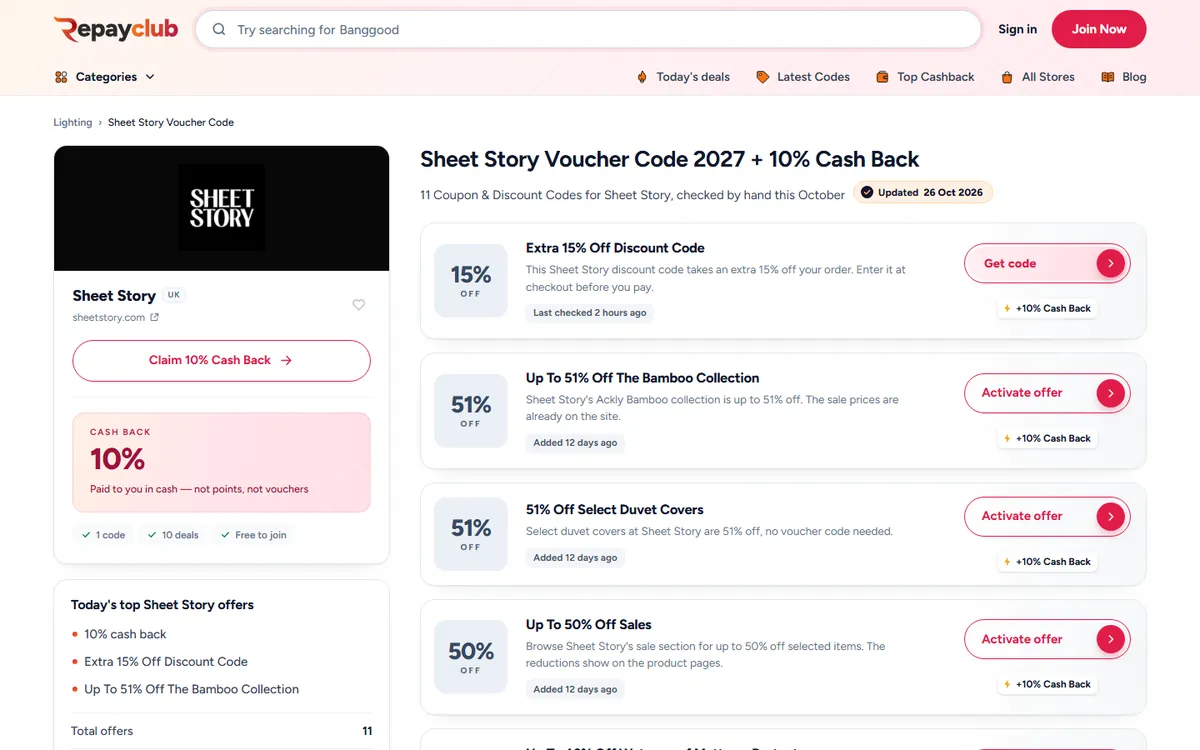
| Sheet Story | 90 days on unused items | A longer wait |
| Bondara UK | 365 days on unopened items | Can take a long time to confirm |
Return windows from each retailer’s published policy, October 2026. Retailers can change them, so check their own site.
Travel is usually slowest of all, because a hotel or holiday is not “used” until you have stayed, so cashback on a summer trip booked in January may not confirm until after you get back. MoneySavingExpert says retailer approval can take anywhere from a few days to a few months, which matches what we see.
Once your confirmed balance passes the site’s minimum, you can withdraw it. A sensible habit, also recommended by MoneySavingExpert: withdraw fairly soon rather than leaving a large balance sitting in your account.
Can you use a voucher code and still get cashback?
Usually, yes, and this is where cashback gets genuinely good. A discount code lowers the price; cashback then pays you a percentage of what you still spent. Used together, you save twice on the same order.
There is one rule that matters: use codes listed on the cashback site you clicked through from. Affiliate tracking usually credits the last link you clicked, so a code picked up on a different coupon site can replace your cashback tracking at checkout, and the retailer then credits that site instead.
| Voucher or promo code | Cashback | |
|---|---|---|
| When you save | At checkout, straight away | After the order is confirmed |
| What you get | A lower price | Money paid back to you |
| Need an account? | No | Yes, usually free |
| Works on sale items? | Depends on the code | Usually yes |
| Can you use both? | Usually yes, as long as the code comes from the same site you clicked through from | |
A worked example: a £60 order with a 10% code comes down to £54. If the retailer also pays 5% cashback, you get £2.70 back on the £54 you paid. Your total saving is £8.70, or about 14.5% off the original price.
Shopping cashback vs credit card cashback
A lot of searches for “how does cashback work” are really about credit cards, so it is worth being clear about the difference.
| Shopping cashback | Cashback credit card | |
|---|---|---|
| Who pays you | The retailer, through its affiliate programme | Your card provider |
| Where it works | Retailers you click through to | Almost anywhere you use the card |
| Typical rate | Around 3.5%, often 5% to 15% in some categories | Usually 0.25% to 2% after any introductory offer |
| Cost | Usually free | Some cards charge an annual fee; interest if you don’t clear the balance |
| When it is paid | After the retailer confirms the order | Monthly, quarterly or yearly, depending on the card |
For the card side, Which?’s cashback guide compares the main UK cashback credit cards. In its October 2026 figures, ongoing rates on the cards it looked at ran from 0.25% to 0.75%, with higher introductory rates for the first few months. Which? also warns that if you don’t clear the balance each month, the interest will quickly outweigh anything you earn.
The two do not compete. If you pay with a cashback card after clicking through from a cashback site, you earn from both, because the card provider and the retailer are paying you for different things. Just make sure you only spend what you would have spent anyway, and pay the card off in full.
Is cashback taxable?
For everyday shoppers in the UK, normally not. HMRC’s Statement of Practice 4/97 sets out that most customers are not taxed on cashbacks and discounts, because money you get back for buying something is treated as a reduction in what you paid, not as income. It is different if you buy as part of a business, where HMRC treats cashback as a trading receipt, and bonuses that are not linked to a purchase, such as some referral rewards, can be treated differently.
In the US the general view is similar: cashback on your own purchases is usually treated as a rebate on the price rather than income. If you buy for a business or earn large amounts, check with a tax adviser, because this is general information rather than tax advice.
Why cashback sometimes does not track
Most purchases track without any thought. When one does not, it is almost always one of these:
- Ad blockers and strict privacy settings. Tracking links rely on cookies, and browsers are much stricter about them than they used to be. Apple’s Safari, for example, has blocked third-party cookies by default since 2020 (WebKit announcement). Some ad blockers also strip tracking links before the retailer sees them.
- Another site got in first. If you click a different coupon or cashback link after your cashback site, the retailer usually credits whichever link came last.
- A code from somewhere else. As above, outside codes can replace the tracking at checkout.
- The order was finished later. Leaving a basket and coming back days later, on another device or straight to the retailer, often means the original click has expired.
- The retailer’s site was already open. If it was open in another tab before you clicked through, the tracking may not attach.
The fixes are simple: click through from your cashback site every time, pause your ad blocker while you check out, finish the order in the same browser in one go, and use codes from the same site. For a big purchase, MoneySavingExpert also suggests clearing your cookies before you click through, so no older link can get in the way.
If a purchase still does not appear after about a week, contact your cashback site with the order number, date, total and confirmation email. Most sites, including ours, will chase the retailer for you, although the retailer has the final say.
Cashback mistakes to avoid
- Chasing the rate instead of the price. A high rate on an expensive product is still expensive. MoneySavingExpert’s example is a £399 TV with 5% cashback when the same TV was £299 elsewhere: the “deal” cost about £80 more. Compare prices first, then add cashback to the cheapest option.
- Spending the money before it is confirmed. Pending is not paid. Returns, cancellations and retailer decisions can still change it.
- Forgetting the excluded parts of an order. Delivery, tax and gift cards rarely earn, so a £100 order with £10 delivery usually earns on £90.
- Using a code from another site. It is the most common reason cashback disappears.
- Leaving a large balance sitting there. Withdraw once you can.
How to earn more cashback
- Make it the first click, every time. The biggest leak is simply forgetting. A bookmark or browser extension from your cashback site helps.
- Focus on bigger purchases. Cashback is a percentage, so it matters most on laptops, furniture, holidays, insurance and software.
- Stack a code on top. Check the cashback site for a working code before you click through. A code plus cashback beats either on its own.
- Compare rates for big buys. The same retailer can pay different rates on different sites, and some raise their rates for a few days during sales.
- Add a cashback card. Paying with a cashback credit card you clear in full adds a second, smaller layer of savings.
- Do not let it change what you buy. Cashback is a reward for shopping you were going to do anyway. Buying something only because it pays 10% back is still spending 90% more than you needed to.
Cashback FAQs
Is cashback free money?
It is money you would not otherwise get, but it comes from spending, so it is only “free” on purchases you were going to make anyway.
How do cashback sites make money?
Retailers pay them a commission for every sale they send. The cashback site keeps part of that commission and passes the rest to you.
What is a good cashback rate?
Across the 7,771 retailers we looked at, the middle rate is 3.5%, and one in four pays 5.25% or more. Anything above 5% is good for most categories; software and digital products often pay 10% or more.
Is cashback real money or points?
With shopping cashback sites it is usually real money, paid to a bank account or PayPal. Some card and loyalty schemes call points “cashback”, so check how a scheme pays before you rely on it.
How long does cashback take?
It usually shows as pending within a few days. It is confirmed once the retailer approves the sale, normally after its return period ends. That can be anywhere from a few weeks to a few months, and longer for travel.
Can I get cashback on a sale price?
Usually, yes. Cashback is worked out on what you actually pay, so it normally works on sale prices and alongside codes from the same site, unless the retailer’s terms say otherwise.
Do I pay tax on cashback?
In the UK, ordinary shoppers normally do not, under HMRC’s Statement of Practice 4/97. Business purchases and bonuses not linked to a purchase can be treated differently.
Why is my cashback still pending?
Retailers wait until the return window closes before they confirm a sale. The wait is set by the retailer, and travel bookings are confirmed only after the trip.
Does cashback work on mobile?
Yes. Click through from the cashback site in your phone’s browser and finish the order in that same browser. Switching to the retailer’s own app after clicking can lose the tracking.
Sources and further reading
- IAB UK and PwC Digital Adspend studyiabuk.com
- MoneySavingExpert’s cashback guidemoneysavingexpert.com
- Citizens Advice explains the 14-day cooling-off periodcitizensadvice.org.uk
- Which?’s cashback guidewhich.co.uk
- Statement of Practice 4/97gov.uk
- WebKit announcementwebkit.org
Store rates and return windows were checked when this guide was updated. Rates change often, so always check the store page before you buy.

The Repayclub team writes shopping guides from real store data: the cash back rates, codes and return policies we track every day.
How we research our guides